Pioneering the Future of Education – Adopting Immersive and VR Learning in Scottish Schools
Imagine Scottish kids exploring the Highlands in VR, dissecting virtual frogs, or dancing Highland reels from their classroom! Bold new SVRMI proposal wants AlbaVerse metaverse in EVERY school.

 A transformative new proposal, the Scottish Virtual Reality Metaverse Initiative (SVRMI), outlines an ambitious strategy to equip every school in Scotland with immersive technology.
The plan proposes a sovereign national metaverse—the “AlbaVerse”—and a comprehensive support infrastructure designed to modernize the curriculum and close the attainment gap.
The Vision: From Consumption to Creation
The winds of change are sweeping through the classrooms of Scotland, carrying with them not the familiar chill of the North Sea, but the boundless possibilities of immersive technology.
In a nation renowned for its pioneering spirit—from the Enlightenment thinkers who reshaped philosophy to modern innovators in renewable energy—Scottish education stands on the cusp of its next great leap: fully embracing immersive and virtual reality (VR) learning.
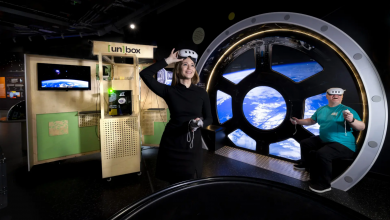
Picture this: a Primary 4 pupil in Hamilton no longer just reads about the rugged beauty of the Highlands or the rhythm of Highland dancing. Instead, they slip on a lightweight VR headset and step into the misty glens, hear the skirl of bagpipes echoing through the valleys, and even practice a few steps themselves in a virtual ceilidh.
At Neilsland Primary School in South Lanarkshire, such an experience wasn’t a distant dream—it became reality in early 2026. A targeted VR project centered on “What Makes Scotland Beautiful” dramatically boosted attendance for pupils who had struggled with traditional approaches, proving that when learning feels alive and personal, children show up eager to participate.
This isn’t isolated experimentation. Across Scotland, from Moray to the borders, educators are weaving VR into the fabric of daily teaching. In secondary schools, VR combats disengagement in STEM subjects by letting students dissect virtual frogs, explore the inner workings of engines, or conduct chemistry experiments without risk.
In lifesaving initiatives, over 1,200 high school students have used immersive simulations to build confidence in emergency response—skills that could one day save lives. Even physical activity gets a boost, with VR games encouraging reluctant pupils to move and engage in ways traditional PE sometimes struggles to achieve.
Boosting Digital Skills
The benefits run deep and wide. Research and real-world results consistently show that immersive learning:
- Skyrockets engagement — students report feeling truly “present” in lessons, turning passive absorption into active exploration.
- Dramatically improves knowledge retention — experiential memory outperforms rote learning, with concepts sticking because they’ve been felt rather than just heard.
- Levels the playing field — VR allows personalized pacing, supports neurodiverse learners, and brings distant or dangerous environments (volcanoes, ancient Rome, the human bloodstream) safely into every classroom, regardless of geography or budget.
- Builds empathy and cultural connection — especially powerful in Scotland, where VR can immerse students in Gaelic heritage, Scots language traditions, or the lived experiences of historical figures.
Scotland is uniquely positioned to lead this transformation. Partnerships with institutions like the University of Glasgow (which has explored XR since the early 2020s and collaborated on cutting-edge platforms) and forward-thinking proposals like the Scottish Virtual Reality Metaverse Initiative point toward a national strategy. Imagine “district models” where each school builds virtual spaces reflecting local history, geography, and culture—persistent 3D worlds that grow with the community, blending global knowledge with proud Scottish identity.
Of course, challenges remain. Equitable access to headsets and reliable broadband in rural areas, teacher training, and thoughtful content curation must be addressed. Yet these are hurdles, not barriers. Scotland has a proud history of overcoming educational challenges through innovation and collective will—from the democratic tradition of broad access to learning to the Curriculum for Excellence’s emphasis on interdisciplinary, experiential education.
The pioneers are already among us: the teachers who integrate 360-degree pupil artwork into VR explorations at schools like Mearns Primary; the councils piloting targeted interventions; the universities developing ethical, effective immersive tools. They remind us that technology isn’t a replacement for great teaching—it’s an amplifier.
As we stand in March 2026, the question isn’t whether immersive and VR learning belongs in Scottish schools. The evidence—from increased attendance and engagement to deeper understanding and inclusivity—shows it already does. The real question is how boldly we scale it.
Let Scotland once again light the way. Let our classrooms become portals to possibility. Let every child, from the islands to the cities, experience the thrill of discovery not as abstract concept, but as lived reality. The future of education isn’t coming—it’s here, shimmering just beyond the headset. It’s time to step through. Together, we can pioneer a Scotland where learning knows no bounds.