Scottish Tourism Alliance: Holyrood Election Manifesto 2026
Exploring the five critical realities from the manifesto that will determine if Scotland can bridge the gap between its natural beauty and its economic potential to become a world leader in 21st-century tourism by 2030.

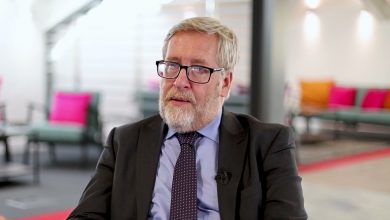
 In the wake of the global pandemic, Marc Crothall MBE, Chief Executive of the Scottish Tourism Alliance (STA), describes the tourism sector as “rising like a phoenix from the ashes.”
On the surface, the flames of recovery are burning bright: in 2024, Scotland welcomed 4.4 million international visitors who contributed a record-breaking £4 billion to the economy.
It is a sector that has proved itself the most resilient of Scotland’s industries, outperforming the rest of the UK in inbound value. However, as any economic analyst will tell you, a phoenix requires sustained fuel to stay airborne. While the headline figures are dazzling, they mask a fragile reality.
The STA’s 2026 Holyrood Election Manifesto reveals a sector at a crossroads. Despite the fact that recent investment in VisitScotland marketing delivered a staggering return of £18 for every £1 spent, the industry faces a complex paradox.
|
 Download the
 The Outperformance Paradox: Leading the UK While Losing Ground at Home
Scotland’s tourism success is currently a story of two markets. While international spend has soared, there is a “significant gap” appearing in the domestic market—the historical backbone of the industry.
In 2024, Scotland saw 1.4 million fewer domestic trips than in previous years. Crucially, these trips were characterized not just by lower volume, but by shorter stays, suggesting a fundamental shift in how residents are spending their leisure time and capital.
This reliance on international travel creates a geographic vulnerability. Edinburgh remains the only region where international visits outnumbered domestic ones; the rest of the country remains heavily dependent on a domestic market that is currently contracting.
“Businesses must have the breathing space to build on these unique assets, to elevate the quality of our visitor experience and deliver value for money.” — Rebecca Brooks, Chair of the STA
To mitigate this, the manifesto argues for better visitor dispersal and robust, ring-fenced funding for VisitScotland to maintain a competitive edge while attempting to revitalize domestic interest in “regional and seasonal” travel.
The Price of Beauty: A Global Competitiveness Warning
Scotland is globally renowned for its natural assets, but in the cold light of economic data, beauty is no longer a sufficient defense. A startling reality highlighted in the manifesto is the UK’s lack of price competitiveness. The World Economic Forum ranks the UK 113th out of 119 countries in this category—a precarious position for a nation seeking to grow its export value.
International tour operators are now warning that Scotland is perceived as becoming “overpriced for the quality of experience offered.” This “pincer movement” is driven by a combination of high-level policy pressures:
- Taxation Disparity: The UK maintains one of the highest rates of VAT in Europe.
- The Unlevel Playing Field: The sector faces “unreplicated business rates support” and disparities in visitor levy charging models compared to the rest of the UK, creating a competitive disadvantage.
- Eroded Profits: Post-pandemic financial crises and a projected £2.6 billion “black hole” in public spending have thinned profit lines, hampering the ability to reinvest in “people, product, and place.”
Without addressing these regulatory and cost barriers, Scotland risks pricing itself out of the very markets it currently leads.
The Invisible Thread: Why a Closed Pub in Plockton Matters to a Web Designer in Glasgow
The most significant takeaway for policymakers is that tourism is no longer a siloed “growth sector”—it is the engine room of the Scottish economy. Tourism-related industries have recently surpassed business and financial services to become the single biggest source of employment in Scotland, accounting for 32% of total growth sector employment.
The “Multiplier Effect” means that 1 in 11 jobs and businesses in Scotland are anchored by this industry. The closure of a single rural hotel or a village pub isn’t just a loss for travelers; it snaps a supply chain that supports:
- Self-catering property maintenance services and trade contractors.
- Local food and drink producers who rely on hospitality volume.
- Specialized toiletries suppliers and laundry services.
- Web designers and marketing agencies in urban hubs like Glasgow who manage the digital storefronts of rural retreats.
Because of this interconnectedness, the tourism sector acts as a “force for good” that brings high streets and post-industrial areas back to life, fostering community cohesion and preventing the “brain drain” in regions suffering from population decline.
The ROI of Grand Stages: Golf and Major Events
The manifesto makes a data-driven case for the “Grand Stage” strategy, framing public investment in major sporting events as a “safe return on investment.”
The figures demonstrate why this is an analyst’s dream:
- The Open: Hosting this event delivered a massive £1.36 billion economic return for Scotland between 2005 and 2024.
- Future-Proofing Golf: A joint £11 million contribution from the Scottish Government and VisitScotland will secure various Open championships through 2034, cementing the nation’s brand as the “Home of Golf.”
- Upcoming Catalysts: The 2027 Tour de France Grand Départ and the joint hosting of UEFA Euro 2028 are essential for wider economic benefits. The STA is also eyeing future bids, such as bringing the World Rally Championships to Aberdeen.
“The sector is a catalyst for growth across all parts of Scotland and is the heartbeat of our local communities, particularly in our island and rural areas that are suffering population drain.” — STA 2026 Manifesto
Future-Proofing: AI, Data, and the “21st-Century Visitor”
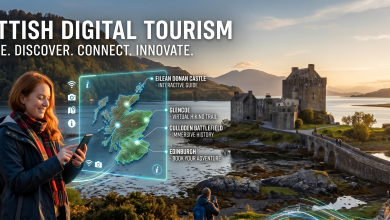
To remain a world leader by 2030, the STA is calling for a “Digital First” agenda. The modern traveler—the “21st-century visitor”—expects a frictionless experience that Scotland’s aging infrastructure is currently struggling to provide.
Key priorities for this digital transformation include:
- Evidence-Based Decisions: Investing in improved national data collection to inform economic impact assessments before policy decisions are made.
- Smart Infrastructure: Moving toward “smart ticketing” across all transport networks and universal contactless payment options to reduce friction.
- The Digital Baseline: Universal 4G/5G and fiber broadband coverage is no longer a luxury; it is a baseline requirement, particularly in rural and island “blackspots” where mobile signals currently fail.
The goal is to harness AI and emerging technologies to personalize the visitor journey, ensuring that Scotland’s “natural brand” is supported by high-tech efficiency.
Conclusion: A Call to Champion, Connect, and Invest
The STA’s 2026 Manifesto is built on a single, sobering truth: “Tourism doesn’t just happen.” As global competition for traveler spend intensifies, Scotland requires intentional, high-level political leadership. The STA’s primary “ask” is the creation of a dedicated, named Cabinet Secretary to champion the sector and ensure cross-portfolio cooperation on everything from planning reform to affordable housing for the workforce.
By addressing the “Outperformance Paradox” and the “Price of Beauty,” Scotland can safeguard its most resilient industry. However, a fundamental question remains for the next Scottish Parliament: Can Scotland afford to rest on its “natural brand” laurels, or will it find the political will to fund the digital and physical infrastructure required to win the global race for the 21st-century traveler?