Bridging the Digital Divide in Scotland: Introducing Care Connect AI
Developing an AI-Powered ‘No Wrong Door Chatbot’ for Scottish Social Services, a Conversational AI interface that serves as a universal, 24/7 entry point for health and social care support.

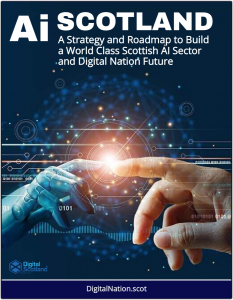 The Digital Nation ambition of the Scottish Government is predicated not just on the digitisation of existing analogue processes, but on the fundamental transformation of how citizens interact with the state.
“Care Connect AI” represents a flagship initiative within this strategic framework, designed to deploy a sovereign, AI-driven conversational agent (chatbot) that serves as a universal, 24/7 entry point for health and social care support.
In today’s increasingly digital world, access to the internet and the skills to use it are essential for participating in society. Yet in Scotland, a significant portion of the population remains digitally excluded—a hidden divide that blocks people from essential services, opportunities, and information.
Highlighted starkly during the COVID-19 pandemic, this exclusion affects healthcare, education, and social support, turning what should be a basic right into a critical social justice issue for a modern, equitable Scotland.
Understanding Digital Exclusion
Digital exclusion goes beyond simply lacking a device. It stems from interconnected barriers:
- Affordability — High costs of devices and data plans exclude many, with over a third of low-income households lacking internet access in earlier data (and 9% of all households still without connection).
- Access — Unreliable or slow internet, especially in rural areas, remains a challenge.
- Skills and Confidence — Around one in six Scottish adults lacks basic digital skills needed for everyday tasks, from device basics to online forms and service access.
These barriers disproportionately impact vulnerable groups, including:
- People in lower socioeconomic groups (where poverty is the strongest predictor of exclusion).
- Older people (facing skills, confidence, and technology familiarity hurdles).
- Disabled individuals (encountering additional access challenges).
The consequences are real and severe, particularly in essential areas like healthcare and education.
Impacts on Healthcare and Social Services
As public services digitize, exclusion creates a two-tier system. Innovations like the ‘Connect Me’ remote monitoring service (supporting over 113,000 people and saving ~400,000 appointments) and digital mental health therapies (with 74,000 referrals annually) benefit many—but lock out those without digital access or skills.
Practical issues compound the problem: high phone charges for waiting on hold, inflexible callback times for those with caring or work responsibilities, and psychological barriers where vulnerable people avoid services to not feel like a “burden.” In a digital-first system, this can lead to self-exclusion and worsened outcomes.
Widening Educational Inequalities
The pandemic exposed massive gaps, with ~30% of pupils lacking necessary devices or internet for remote learning. Parental support is often limited when adults themselves lack digital confidence, risking long-term, potentially irreversible attainment gaps.
Scotland’s Response: Progress, Then Stalled Momentum
The crisis prompted strong action, including:
- The Connecting Scotland programme (£50 million) — providing devices, data, and training to 61,000 vulnerable households.
- Targeted support for shielding/at-risk individuals (£5 million for 9,000 people).
- School-focused funding (£9 million for 25,000 children).
Yet post-pandemic momentum has faded. A 2024 Audit Scotland report highlighted weakened national leadership, with the ambition to “leave no one behind” lacking a clear action plan. While local efforts (e.g., council tablet lending libraries and skills training) show promise, national coordination has slowed—creating risks as public services push further digitization amid budget pressures.
The Path Forward: Care Connect AI
Enter Care Connect AI, an innovative, AI-powered initiative designed to tackle these challenges head-on.
Care Connect AI develops an agentic “No Wrong Door” approach for health, care, and social services. Unlike basic directories or simple chatbots, this agentic AI understands complex, multi-faceted needs, combats loneliness, and seamlessly connects users to appropriate support—while upholding human rights principles, including meaningful choice between digital and non-digital pathways.
At its core, the project unites third sector organizations (charities, community groups) and government agencies (local authorities, public services) to build a shared, dynamic knowledge base of social support services. This centralized, cloud-based repository aggregates vetted information from government guidelines, local resources, third sector expertise, and more—regularly updated via a collaborative governance framework.
Powering this is an embeddable “No Wrong Door” AI chatbot deployable across partner websites (council portals, charity pages, NHS sites, etc.). Using natural language processing, it:
- Engages users conversationally, asking clarifying questions.
- Provides tailored signposting to services (e.g., housing support, benefits like PIP, food banks, carers’ respite, or safeguarding escalation).
- Offers personalized outputs (pre-filled forms, appeal letters).
- Includes accessibility features: simple language, voice input, multilingual support, text-to-speech.
- Tracks interactions to spot service gaps and inform improvements.
Benefits include:
- For citizens (especially vulnerable groups): 24/7 accurate guidance, reduced wait times (from weeks to minutes), and lower barriers through inclusive design.
- For organizations: Less pressure on frontline staff, allowing focus on complex cases and better cross-sector coordination.
- For the system: Scalability, reduced duplication, improved discoverability, and greater equity.
The initiative is expandable to more government portals, embedding the “no wrong door” principle across Scotland’s fragmented support ecosystem.
Conclusion
Digital exclusion remains a pressing social justice challenge in Scotland, deepened by uneven post-pandemic progress.
Care Connect AI represents a forward-thinking, compassionate response—leveraging agentic AI to bridge gaps, promote inclusion, and ensure no one is left behind in the journey toward a fairer digital nation. By combining human-centered design with intelligent technology, it offers a scalable path to more equitable access to health, care, and social services.