Navigating the 2025–2030 Scottish Cyber Resilience Framework
Scotland's 2025–2030 Cyber Resilience Framework shifts cyber security from IT focus to a whole-of-society enabler. It builds strength, confidence, and continuity to support national priorities like economic growth and public services.

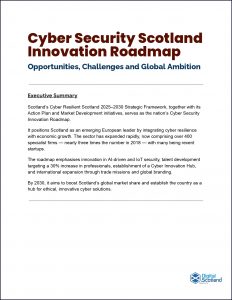 Scotland’s 2025–2030 cyber resilience strategy marks a significant evolution in how the nation approaches digital security.
No longer viewed as a narrow IT issue, cyber resilience now serves as a foundational element supporting Scotland’s four national priorities: eradicating child poverty, growing the economy, tackling the climate crisis, and improving public services.
Amid rising geopolitical tensions and rapid technological change, the security of digital systems directly influences the country’s ability to meet these goals.
The framework’s central ambition, Vision 2030, shifts the focus from simply securing technology to fostering strength, confidence, and continuity across Scottish society. The overarching goal is for Scotland to thrive as a digitally secure and resilient nation.
|
 Download the
 Vision 2030 Core Objectives
- Building Strength: Secure infrastructure that supports economic growth and service continuity.
- Instilling Confidence: Empowering citizens and organisations to engage safely online.
- Ensuring Continuity: Developing the capacity to withstand, respond to, and recover from cyber incidents with minimal disruption.
This vision is delivered through a “Strong, Capable, Resilient” triad that treats these elements as an interconnected system rather than isolated targets.
The Triad of Success
The model emphasises mutual reinforcement:
- Strong: Economic strength underpinned by robust, secure infrastructure across all sectors.
- Capable: Cyber security recognised as a shared national, organisational, and personal responsibility, supported by a strong talent pipeline and skills development.
- Resilient: Scotland positioned as a “hard target” for cybercriminals, with mature capabilities for rapid response and recovery.
For organisational leaders, this means moving beyond reactive defence to proactive resilience. Cyber incidents increasingly affect share prices, public trust, and operational viability. Integrating cyber resilience into business continuity planning transforms it from a cost centre into a strategic enabler of digital transformation.
Cultivating a Culture of Shared Responsibility
The framework adopts a whole-of-society approach, moving away from seeing employees as vulnerabilities toward creating an empowered workforce. Responsibility spans individuals, businesses, and the third sector.
Key shifts include progressing from basic awareness to actionable knowledge—ensuring people know how to recognise threats, report incidents, and access support. Lifelong learning forms a critical pillar: initiatives such as “The Bongles” for young learners, the CyberFirst schools programme, and resources like “Cyber Resilience and You!” for higher education build the future talent pipeline. National Occupational Standards guide professional development.
Workplace culture must prioritise resilience. Data from 2025 highlights the third sector’s vulnerability, with 86% of charities reporting encounters with fraudulent emails or websites.
Cyber Essentials serves as the foundational standard. Organisations certified under the scheme are 92% less likely to make a cyber insurance claim. Private sector examples, such as St James’ Place requiring Cyber Essentials Plus from partners, have achieved an 80% reduction in incidents. For Scottish businesses, achieving and maintaining this baseline is essential for foundational security.
Securing the Digital State
Public trust underpins successful digital transformation. Scotland is embedding “Security by Design and Default” into all public-facing services, aligned with the UK Government’s Secure by Design Framework.
Leaders must address risks in legacy systems while ensuring new developments incorporate continuous security assurance from the outset. The ScotAccount initiative exemplifies this approach, providing a single, secure digital identity for accessing services such as Disclosure Scotland and the PVG scheme. It enhances both citizen trust and operational efficiency.
The Cyber Observatory, launching in Autumn 2025, will automate threat intelligence gathering and assess the public sector’s cyber posture using the Cyber Assessment Framework (CAF). This data-driven tool will enable targeted interventions and support collective national resilience. Individual organisations’ maturity directly contributes to the broader ecosystem.
Strengthening the Supply Chain
Modern attacks increasingly target supply chains. Recent UK data indicates that nearly half of businesses have suffered breaches, many originating from third-party vulnerabilities. An organisation’s security is now only as strong as its weakest supplier.
Strategic actions for supplier assurance include:
- Rigorous evaluation of managed service providers (MSPs) and critical suppliers, considering geopolitical risks.
- Leveraging the forthcoming Cyber Security and Resilience Bill, which will extend regulatory oversight to MSPs and suppliers of essential services.
- Scaling innovations from the June 2023 CivTech Challenge, with wider rollout planned for 2026.
- Shifting from one-off audits to continuous monitoring throughout contract lifecycles.
The Scottish Cyber Incident Management Procedure provides a standardised blueprint for maintaining service continuity even during supplier disruptions.
National Defence Infrastructure
Effective cyber defence requires collaboration. Scotland’s layered support ecosystem includes:
- SC3 (Scottish Cyber Coordination Centre): A 24/7 national hub for incident coordination, threat intelligence, early warnings, and hosting the Cyber Observatory. It acts as Scotland’s local lead.
- NCSC (National Cyber Security Centre): The UK’s technical authority (part of GCHQ), offering expertise for high-impact incidents and critical infrastructure protection.
- Police Scotland Cyber and Fraud Unit (CAFU): Established in 2025, this unit aligns with Chief Constable Jo Farrell’s 2030 Vision. It uses science, technology, and data to disrupt cybercrime while centring victims in responses.
- CyberScotland Partnership (CSP): The national portal for awareness and engagement, including events such as Cyber Scotland Week.
This coordinated model reduces mean time to detect threats and shortens recovery periods by enabling proactive rather than purely reactive measures.
Strategic Outlook
The 2025–2030 Scottish Cyber Resilience Framework represents a comprehensive shift toward integrated, society-wide resilience. By embedding security into economic, public service, and community priorities, Scotland aims to build not just technical defences but a culture of shared strength and adaptability.
Success will depend on sustained leadership commitment, investment in skills and technology, and effective collaboration across public, private, and third sectors. As digital dependence grows, the ability to maintain secure, trustworthy systems will increasingly determine Scotland’s capacity to deliver on its national ambitions.