How Scotland is Rewiring the Future of Social Care
Scotland launches the Digital Care Collaborative to bridge the innovation gap in social care, driving coordinated digital transformation for preventative, person-centred community support.

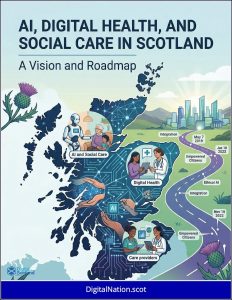 Scotland faces a growing challenge in social care. Demand for community-based support is rising as the population ages and expectations for personalised, preventative services increase.
Traditional models struggle under this pressure, often leaving social care, social work, and housing sectors lagging behind healthcare in digital innovation.
The launch of the Digital Care Collaborative Scotland (DCCS) in December 2025 aims to change this by creating a coordinated national approach to digital transformation in these vital areas.
The Care Paradox: Advanced Health Tech, Outdated Community Support
Modern headlines celebrate breakthroughs like robotic surgery, AI diagnostics, and genomic medicine in healthcare settings.
Yet, step into social care, social work, or housing support, and the picture often feels decades behind. Professionals rely on outdated tools ill-suited to the complex, community-focused nature of their work. This “Care Paradox” highlights a systemic imbalance: healthcare receives the bulk of technological investment, while the services that help people maintain daily independence and wellbeing are treated as an afterthought.
|
The DCCS, hosted by the Digital Health & Care Innovation Centre (DHI), seeks to bridge this gap. Commissioned by the Scottish Government in 2024, it acts as a national hub connecting government, local authorities (via COSLA), and frontline providers. Rather than forcing social care into health-centric models, the DCCS tailors digital strategies to the unique needs of community care—emphasising prevention, person-led support, and equity.
The Stark Investment Gap: The “0.02% Problem”
A key driver for the DCCS is the massive disparity in funding for innovation. UK-level figures from 2023–2025 illustrate the issue clearly:
- Healthcare total budget: £214.1 billion (up from £188.5 billion).
- Social care innovation projects (via DHSC): £42.6 million.
- Innovation investment ratio: Just 0.02% for social care relative to the health budget.
These numbers, while UK-wide, reflect a structural problem in Scotland too. Social care has been trapped in a cycle of small-scale pilots with limited ability to scale or attract further investment. Without robust business cases or dedicated support, innovation stalls.
This gap extends beyond money to infrastructure. Several key innovation pathways are effectively closed to social care:
- The Accelerated National Innovation Adoption (ANIA) Pathway fast-tracks tech into the NHS but withholds equivalent support, governance, and resources from care providers.
- The Innovation Design Authority focuses primarily on healthcare needs, overlooking the diverse environments of social work and housing.
- Chief Scientist Office (CSO) Innovation Fellowships prioritise health applicants, limiting the development of digital leadership and research capacity in care sectors.
The result is an “innovation deficit” that threatens the entire health and care system’s sustainability. Without change, community services cannot effectively relieve pressure on hospitals or contribute to national goals like the National Care Service and population health improvements.
The Costs of Doing Nothing: Risks of Fragmentation
Continuing with uncoordinated, isolated digital projects is unsustainable. A review of digital innovation in social care (drawing from experiences in Wales and Scotland’s own DHI landscape assessment) identified major problems caused by lacking central coordination:
- Weaker overall innovation support systems compared to health or education.
- No single evidence hub for sharing what works, hindering replication and scaling.
- Fragmented activity leading to duplication, wasted resources, and missed opportunities.
- Absence of strategic leadership to align efforts with broader reform goals.
These issues risk widening the “parity gap,” where social care and housing cannot keep pace with Scotland’s digital public services transformation. They also undermine contributions to initiatives like the “Digital Front Door,” which aims to improve access to services. Without national coordination, the sector remains reactive rather than proactive.
The DCCS Solution: Five Strategic Enablers for Change
The DCCS provides a structured framework to address these challenges and create “conditions for success” that individual organisations cannot achieve alone. It shifts focus from ad-hoc technology trials to evidence-based, scalable transformation. The framework rests on five national strategic enablers:
- Creating the Conditions: Develop a clear national pathway with priorities that promote genuine parity between sectors. Position DCCS as a trusted advisor for providers navigating digital change.
- Knowledge Exchange and Networking: Connect care professionals, technology experts, policymakers, and stakeholders across Scotland and beyond to share learning and speed up adoption.
- Evidence Building and Research: Fill the evidence hub gap by collecting and showcasing best practices. This strengthens the case for funding and supports research tailored to digital care.
- Developing Resources and Practical Tools: Create simple, actionable tools to help local teams with procurement, implementation, and everyday innovation—reducing complexity for frontline workers.
- Workforce Capability and Learner Pathways: Build digital skills and confidence across the workforce. Partnerships with NHS Education for Scotland (NES) and the Scottish Social Services Council (SSSC) are central to developing leadership and training.
Together, these enablers support a cultural shift toward preventative, community-based care that aligns with Scotland’s broader ambitions for person-led services and reduced inequalities.
Strong Governance and Collaboration
The DCCS is not a top-down initiative but a collaborative effort involving a wide range of partners. Governance includes a Strategic Oversight Group and an Operational Delivery Group, with links to the Digital Front Door programme.
Key partners include the Care Inspectorate, COSLA, Local Government Digital Office, National Social Work Agency, Scottish Care, the Scottish Federation of Housing Associations, the Health and Social Care Alliance, Integration Joint Boards (IJBs), Quarriers, and the University of Strathclyde.
This broad coalition, developed through co-design with people who have lived experience, ensures solutions are practical and human-centred. It positions care sectors as active drivers—rather than passive recipients—of Scotland’s digital future.
Why This Matters Now
Aligning with the DCCS supports key policy goals, including NHS renewal, the emerging National Care Service, and frameworks focused on prevention, equity, and population health. By enabling better data sharing, streamlined services, and innovative community solutions, digital integration can help people live independently longer and reduce avoidable hospital admissions.
The initiative represents a strategic rewiring: moving social care from fragmented pilots to sustainable, national-scale impact.
Taking Action: How to Get Involved
Organisations and individuals in social care, social work, and housing are encouraged to engage immediately:
- Open Membership: Free and inclusive for all committed stakeholders.
- Subscribe and Connect: Sign up via the DHI website to access resources, updates, and the growing community.
- Align Strategies: Review local digital plans against the DCCS framework ahead of the April 2026 Detailed Delivery Plan for 2026/27 activities.
A Resilient Future
Scotland’s social care system stands at a turning point. The DCCS offers a practical, coordinated pathway to close the innovation gap, reduce fragmentation, and unlock the potential of digital tools tailored to community needs. By embracing this collaborative framework, providers can help build a more preventative, equitable, and resilient care system—one that supports people where they live and eases pressure across the entire health and care landscape.
This is more than a technology upgrade. It is an opportunity to rewire how Scotland delivers care, ensuring that innovation serves the real complexities of human wellbeing in the 21st century. Joining the DCCS allows stakeholders to maximise collective impact for the communities they serve.